Mapping the Canon: Quantitative Approaches to Literary History · Darmstadt · June 18–19, 2026
Evolution of the Poetic Canon in the Princeton Prosody Archive
01
Canonicity through use
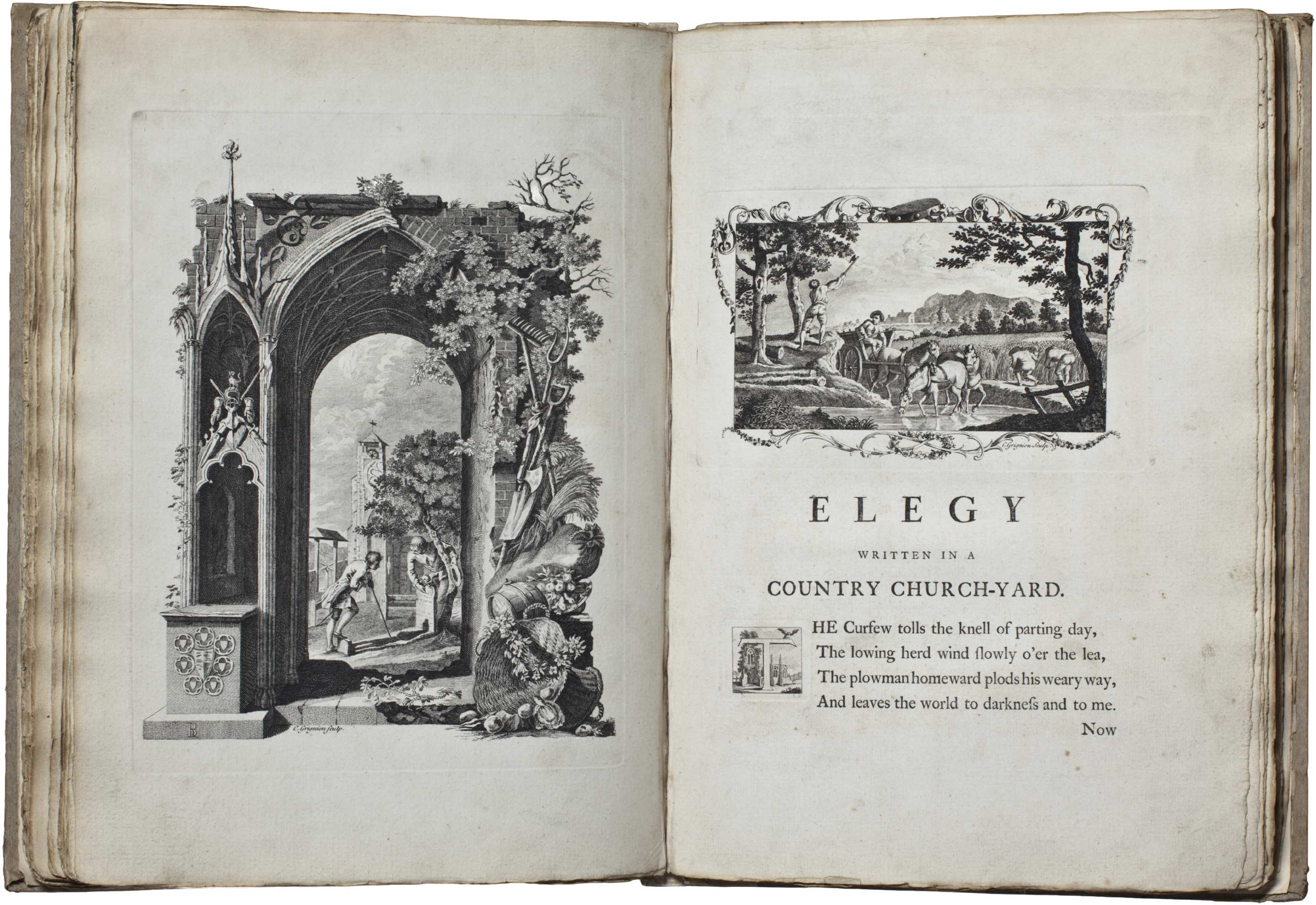
Gray’s Elegy, in pieces
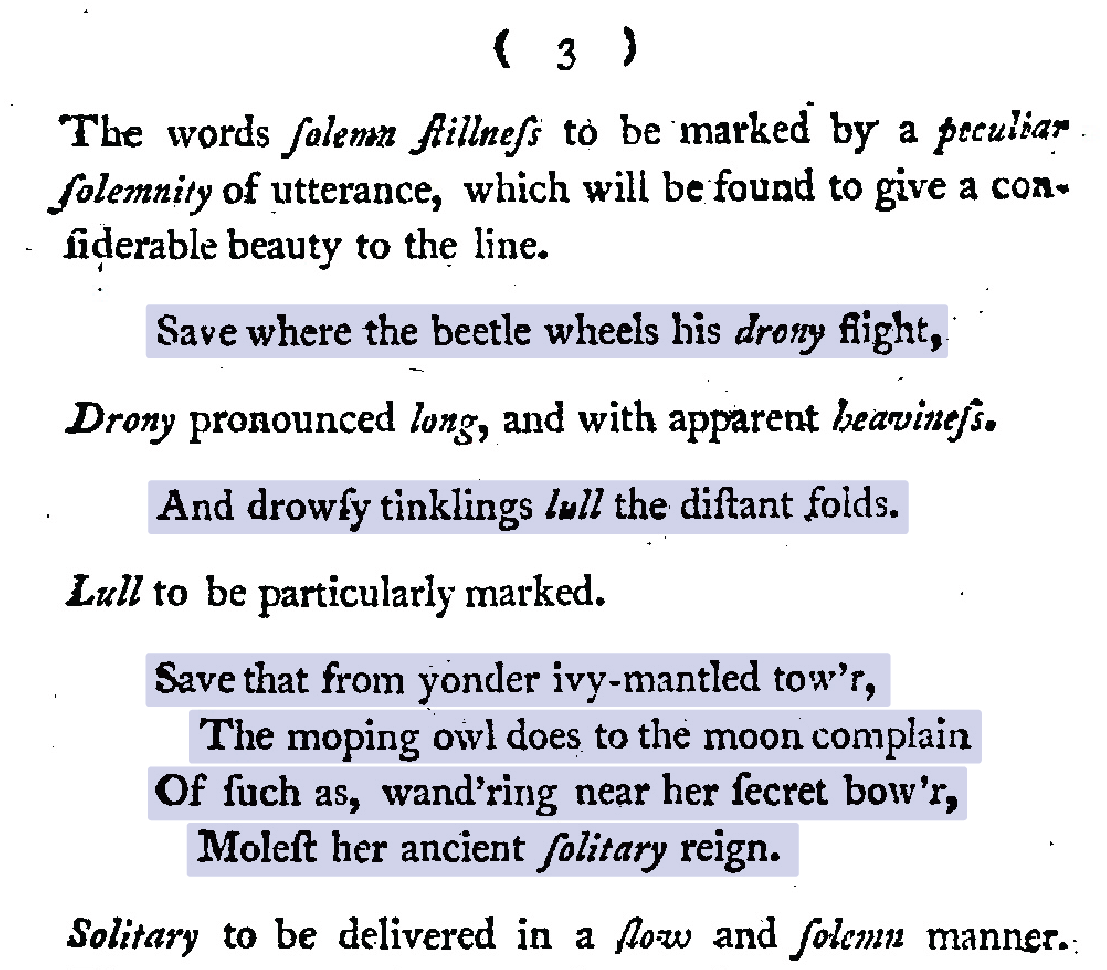
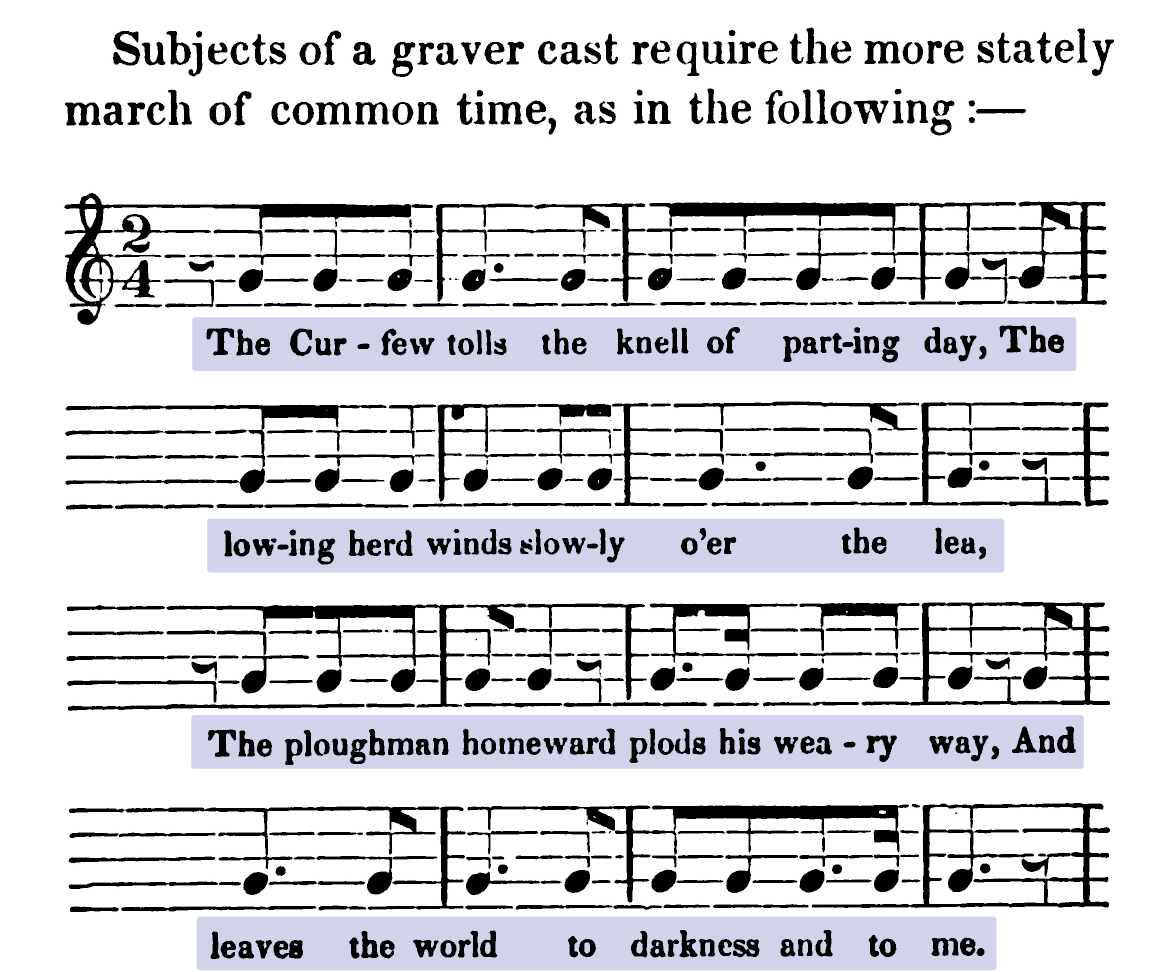
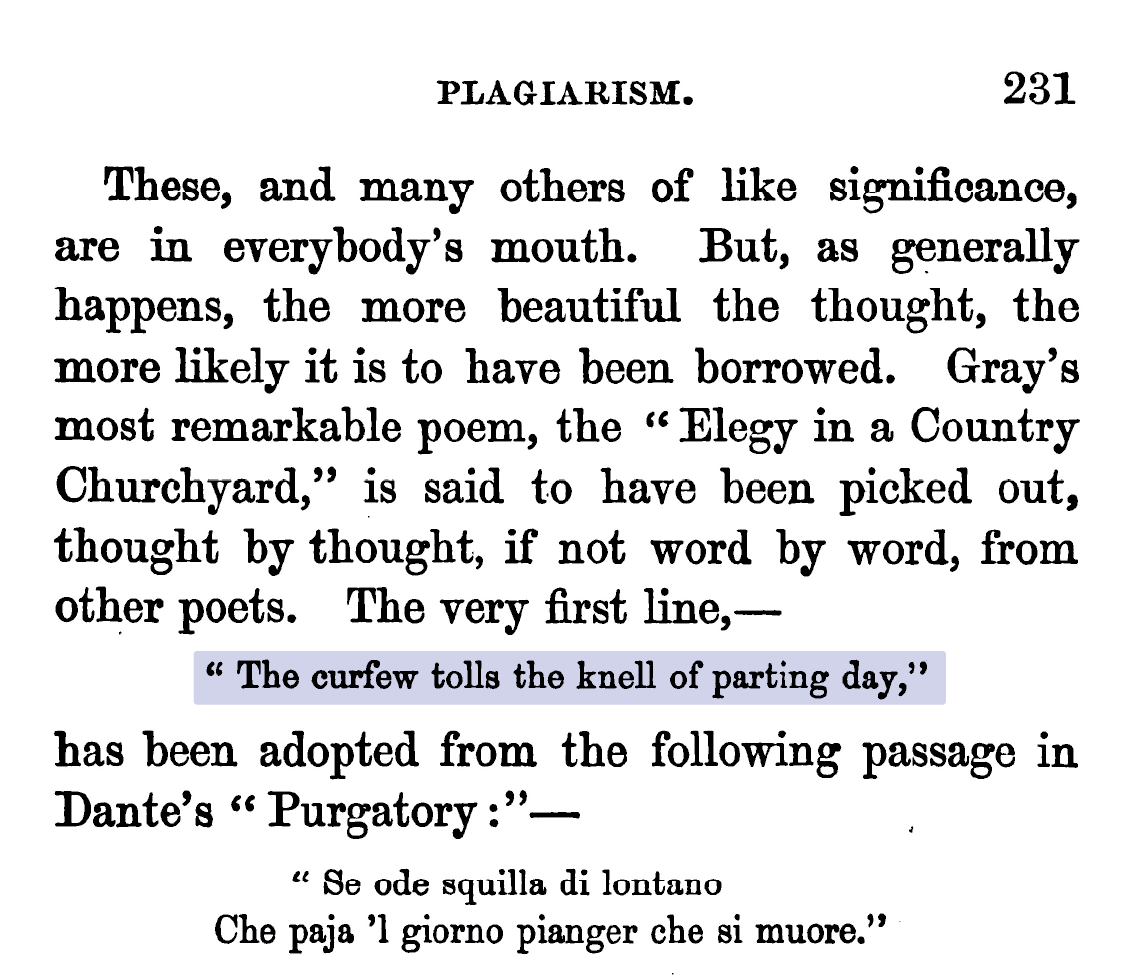
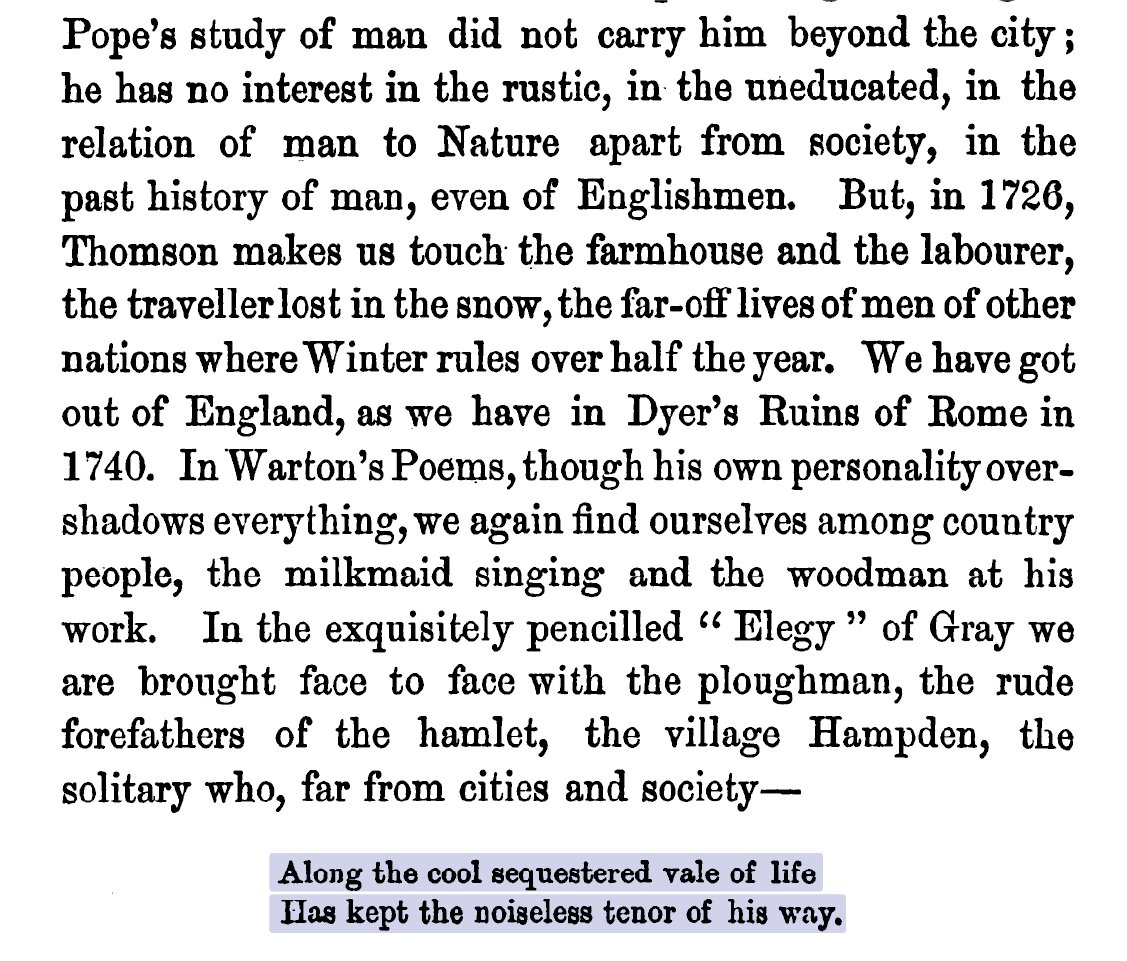
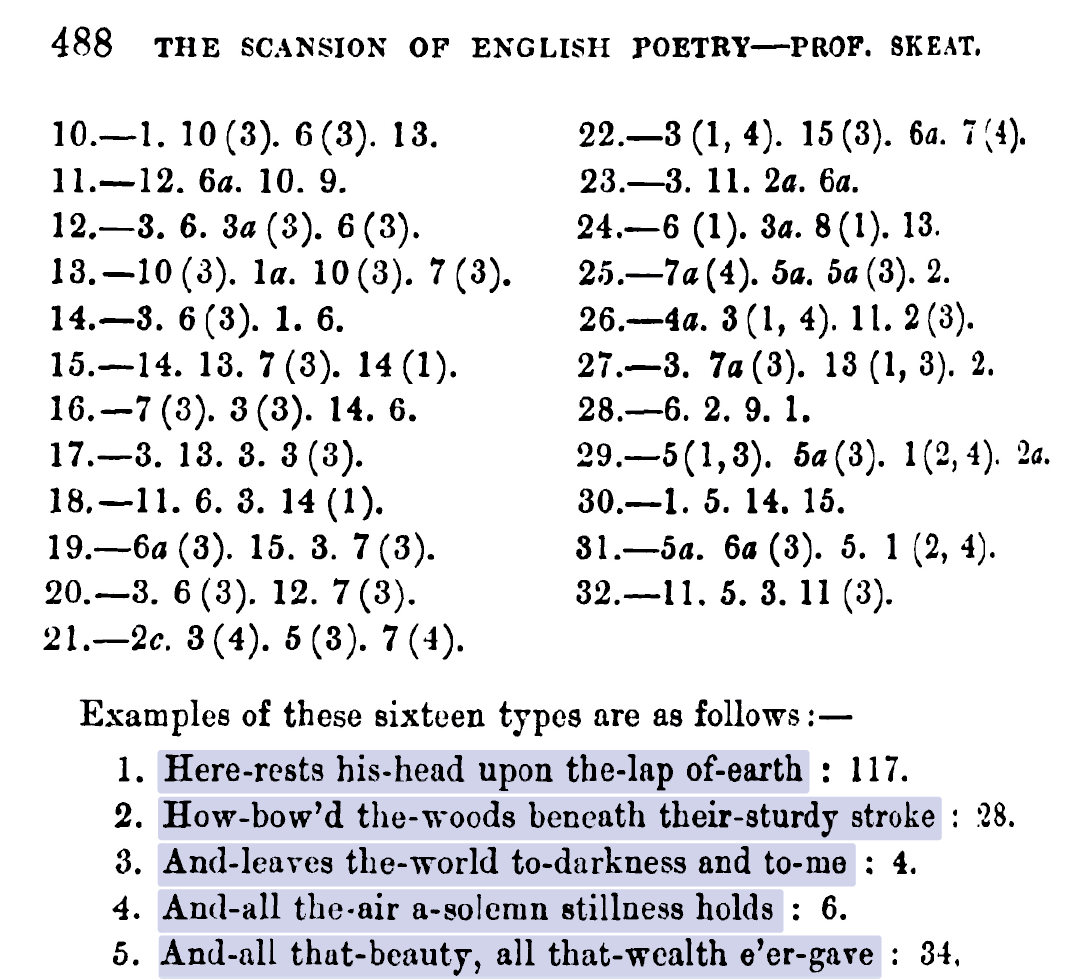
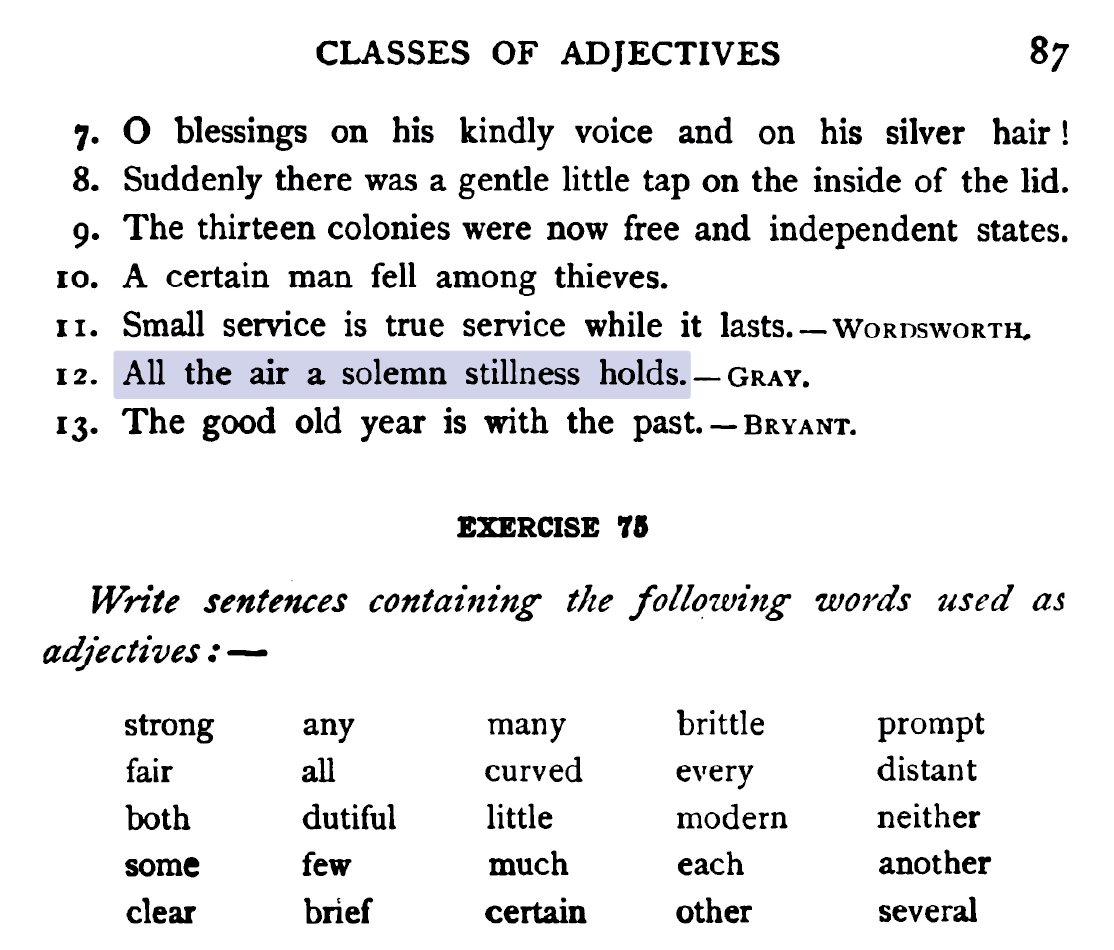
Rarely the whole poem—usually a line someone can teach with.
Authority made through use—lines cut, copied, and repurposed.
“le jeu du découpage et du collage” Compagnon, 1979
02
The Princeton Prosody Archive
The scattered history of poetic instruction
- What it gathers
- Prosody manuals, elocution handbooks, grammar books, schoolbooks on versification, etc.
- Span
- 1532–1929 · searchable · public domain
- Scale
- ~7,000 works · ~2 million pages · full text
- Collections
- Six, hand-curated — chiefly Literary & Linguistic
Pages per year

03
Canonicity traced in the PPA
An archive of use
Not an anthology of great literature—books that make verse legible, audible, and teachable.
Poets as instruments. Names invoked to settle a rule—which poets become usable, repeatable common ground when writers explain how verse works.
Their lines. Lines quoted to make a point concrete—cut into couplets and stanzas, made to do explanatory work, and able to travel without their poems.
3.1
Counting names
with Petr Plecháč & Artjoms Šeļa · [forthcoming]
Who gets named?
A poet’s name is not a stable search object — so we resolve every mention to one identity.
-
01 surface forms
- “Shakspeare”
- “Schakespeyr”
- “Shaxpere”
- “Shakpeare”
- “the sweet swan of Avon”
-
02 neural linking
ReFinED mention × context -
03 knowledge base
William Shakespeare Wikidata Q692 -
04 countable signal
737,194 mentions → 3,164 poets
Method
From name strings to poets
Named-entity recognition only says “Shelley is a person.” Entity linking says which Shelley — Mary or Percy Bysshe — and pulls “Mrs. Shelley,” “Mary Wollstonecraft Shelley,” and the bare surname onto one identity across two centuries.
- the linker ReFinED, zero-shot. A neural model that detects and disambiguates each mention jointly from context, mapping it to a Wikidata QID (Dante → Q1067) with a 0–1 confidence. No corpus-specific training; ~1 day on an A100 over 1.68M pages.
- the Wikidata trap Linking is only as clean as the knowledge base. Wikidata files Friedrich Fröbel (the kindergarten founder) and Elizabeth Barrett Browning (d. 1861) among “soccer players” and “screenwriters” — so the poet set must be filtered, not taken raw.
- how accurate? ~98% at the 0.90 threshold. On 50 hand-annotated pages (3 annotators), 56 of 57 high-confidence links were correct. The system errs toward silence: its misses are hard OCR forms (“Bobert Bums” → Burns, “THEOCRITUS”), not fabricated poets.
- the cascade From spans to a poet universe. 23.9M mention spans → 11.6M linked → 92,823 humans → poet-flagged (Q49757) → conf. ≥0.90 → seen in ≥2 works → born ≤1900. Noise lives in singletons — the stability gate drops 34% of names but only 0.4% of mentions.
Final poet universe: 3,164 poets · 737,194 mentions across 3,149 works, 1559–1929
A superstar economy
A handful of poets carry most of the attention.
The top 1% — just 32 poets — account for 59% of all mentions (Gini 0.92). Shakespeare, Milton, Chaucer, Homer, Virgil at the head.
A canon in motion
The leaderboard reshuffles for two centuries — yet a few anchors never leave the head.
Cumulative distinct works, by decade · top 10 · PPA Literary collection
but a name isn’t a line
Being named is not the same as having your words travel.
3.2
Counting lines
with Meredith Martin, Rebecca Sutton Koeser & Laure Thompson · [under review]
What gets quoted?
A quoted poem is not a search object — so instead of searching, we let the archive collide with nearly all of English poetry, and see what aligns.
-
01quoted fragmentsource corpus
The first line, “The curfew tolls the knell of parting day,” has been adopted from Dante’s Purgatorio.
a PPA host work, 1857
Princeton Prosody Archive 7,061
works -
02 text reuse
passim n-gram alignment -
03reference poemreference corpus
Gray’s Elegy Written in a Country Churchyard Chadwyck-Healey 246,724
reference poems -
04 countable signal
252,893 distinct appearances of 37,406 poems across 3,962 PPA host works
A million alignments → an analytic corpus
passim finds far too much. Most of the method is deciding what counts.
-
Raw passim alignments
1,263,587
-
Poem appearances (poem × host work)
509,030
-
Literary + Linguistic · reprints collapsed · 1694–1920
274,206
-
Implausible & misattributed matches removed
252,893
252,893 poem appearances · 37,406 poems · 3,962 host works
Method
Finding quotations at scale
A quotation is an asymmetric match: we align the PPA, where quotations surface, against a reference body of poetry — the Chadwyck-Healey English Poetry Database, deduplicated to 246,724 reference poems, plus Shakespeare’s plays, which Chadwyck-Healey leaves out.
- the tool passim. Built for the Viral Texts project to find reprinted passages across noisy newspaper OCR. It needs no prior guess about which texts align, and is robust to OCR error and ragged passage boundaries.
- tuned for verse Short quotes, not long reprints. passim’s defaults assume long documentary reuse, so we lowered the bar — n-gram 25→15, min length 50→25, gap 600→300, max DF 100→10,000 — with final values chosen against a hand-annotated gold set.
- the unit Poem appearance, not raw record. OCR noise and paraphrase split one visible quotation into several alignment records, so we count a poem’s presence in a host work once — the level every question here operates at.
- then filter Matches aren’t yet a corpus. Host-side (Literary/Linguistic collections, collapse reprints, 1694–1920) and poem-side (hand-remove centos & adaptations, a biographical-plausibility cut) filtering follow — the counts are the analytic-corpus detour one slide up.
1,263,587 raw alignments → 509,030 appearances → 252,893 appearances of 37,406 poems across 3,962 host works
The most-hosted poems
| # | Work | Author | Appearances | In the PPA |
|---|---|---|---|---|
| 1 | Paradise Lost | John Milton | 1,326 | 1679–1929 |
| 2 | Hamlet | William Shakespeare | 1,287 | 1702–1929 |
| 3 | Psalms | King James Bible | 1,145 | 1644–1928 |
| 4 | Julius Caesar | William Shakespeare | 909 | 1702–1929 |
| 5 | Macbeth | William Shakespeare | 877 | 1702–1929 |
| 6 | The Merchant of Venice | William Shakespeare | 844 | 1718–1928 |
| 7 | An Essay on Criticism | Alexander Pope | 833 | 1712–1929 |
| 8 | Proverbs | King James Bible | 757 | 1644–1927 |
| 9 | Elegy Written in a Country Churchyard | Thomas Gray | 735 | 1756–1929 |
| 10 | Job | King James Bible | 698 | 1644–1927 |
| 11 | Don Juan | Lord Byron | 694 | 1810–1929 |
| 12 | Christus: A Mystery | Henry Wadsworth Longfellow | 687 | 1825–1929 |
| ⋯ 38,898 more · 42% quoted just once · Gini 0.72 ⋯ | ||||
| 38,911 | The Mohawk | John D. M’Kinnon | 1 | 1909 |
| 38,912 | Seldom “can’t” | Christina Georgina Rossetti | 1 | 1915 |
| 38,913 | Greater Memory | Arthur William Edgar O’Shaughnessy | 1 | 1916 |
| 38,914 | To a Cricket | William Cox Bennett | 1 | 1912 |
When a match lies
“Original Poetry”
passim finds real text reuse — but a reference “poem” isn’t always original. Chadwyck-Healey’s long tail of the mute inglorious hides centos and adaptations.
Ode to the Human Heart — Laman Blanchard, 1842
- Blind Thamyris, and blind Mæonides,Milton
- Pursue the triumph and partake the gale!Pope
- Drop tears as fast as the Arabian trees,Shakespeare
- To point a moral or adorn a tale.Johnson
Canto LXXX — Ezra Pound, 1917
The evil that men do lives after them’ Shakespeare
well, that is from Julius Caesar
unless memory trick me
who crossed the Rubicon up near Rimini
So we hand-remove centos & adaptations, then apply a biographical-plausibility filter — no work can quote a poet not yet born (it discards Pound, b. 1885, correctly).
A widening practice
Distinct poems quoted per 100 pages of prosody writing — a rate, so it climbs only if quotation itself broadened, not merely because the archive grew.
Method
Holding the archive constant
A raw count of distinct poems can’t separate a widening practice from a thickening archive — more host pages simply mean more chances to quote. So we model a rate, with the archive’s size netted out.
- a rate, not a count The log‑pages offset. Page volume enters with its coefficient fixed at 1 — double the host pages, double the poems, by construction. The model is then free to find the departures from that proportionality.
- a flexible trend A natural cubic spline s(y). Free to bend where the evidence calls for it; 7 degrees of freedom, chosen by AIC. “Natural” keeps the curve from flailing at the window’s edges.
- room to wobble Negative Binomial, not Poisson. Yearly counts vary far more than their mean — one dense anthology spikes a year — so we relax the equal‑variance assumption. αdisp = 0.5; post‑fit dispersion ≈ 1.01.
Modelled window 1694–1920 · 1694 = first year with ≥5 PPA host works · 1920 = the PPA’s coverage horizon
A trajectory for every poem
Which poems did prosodists reach for more over time — and which did they quietly set aside?
\( p_{it} \) — a poem’s prevalence: the share of a decade’s prosody works that quote it.
\( k_{it} \sim \text{Beta-Binomial}\,(n_t,\, p_{it}) \) — counts are overdispersed, so not a plain binomial.
- Partial pooling. Thin-evidence poems are pulled toward the corpus trend; well-attested ones pull it.
- Beta-binomial. Absorbs the superstar overdispersion a plain binomial can’t.
- Eligibility window. Each poem is scored only in decades it could have been quoted (no left-truncation bias).
Hierarchical Bayesian · 896 sustained-presence poems (≥30 host works across ≥10 decades)
Risers, decliners, anchors
Medieval and Romantic verse climbs; neoclassical translation fades; the perennials hold.
Method
Reading each poem against the corpus
- the input Prevalence per decade. For each eligible poem, p̂ = kit/nt — the share of that decade’s PPA host works that quote it. Fitted with a beta‑binomial rather than a binomial, because the superstar poems are overdispersed.
- the headline number The slope b¹ᵢ. Gaining or losing ground relative to the shared trend — not in absolute terms. A positive slope outpaces the average poem; a negative one lags even as the whole practice widens around it.
- reading the slope Log‑odds per decade. +0.25 ≈ ×1.28 odds (~28% likelier to be quoted each decade); −0.20 ≈ ×0.82 (~18% less). “Credibly” rising/declining = the 95% credible interval on b¹ excludes zero.
- keeping it honest Partial pooling + author shift. Thin‑evidence poems are pulled toward the corpus trend; well‑attested ones pull it. ua(i) separates a poem’s own movement from its author’s standing (Shakespeare: 37 works; Gray rests almost entirely on the Elegy).
Eligibility starts 18 yrs after the poet’s birth — a Tennyson zero in the 1700s is impossibility, not neglect · population = ≥30 host works across ≥10 decades → 896 poems · Bambi / PyMC (NUTS), R̂ ≤ 1.02
Decliners
| # | Work | Author / Translator | Slope | Host works |
|---|---|---|---|---|
| 1 | Pastoral V (transl. 1697) | Virgil / John Dryden | −.27 | 31 |
| 2 | The Art of Poetry (transl. 1680) | Horace / Earl of Roscommon | −.25 | 92 |
| 3 | Prince Arthur (1695) | Sir Richard Blackmore | −.25 | 58 |
| 4 | On Roscommon’s Translation of Horace (1680) | Edmund Waller | −.24 | 32 |
| 5 | The Art of Poetry (transl. 1757) | Horace / William Duncombe | −.24 | 42 |
| 6 | The Georgics (transl. 1753) | Virgil / Joseph Warton | −.24 | 50 |
| 7 | Medulla Poetarum Romanorum (transl. 1737) | Henry Baker | −.23 | 214 |
| 8 | Pastoral I (transl. 1697) | Virgil / John Dryden | −.23 | 45 |
| 9 | The First Satire of Persius (transl. 1693) | Persius / John Dryden | −.22 | 39 |
| 10 | An Essay on Translated Verse (1684) | Earl of Roscommon | −.22 | 125 |
| 11 | Pastoral III (transl. 1697) | Virgil / John Dryden | −.22 | 35 |
| 12 | Metamorphoses, Book XII (transl. 1700) | Ovid / John Dryden | −.22 | 31 |
| 13 | Metamorphoses, Book I (transl. 1693) | Ovid / John Dryden | −.21 | 48 |
| 14 | An Essay upon Poetry (1682) | Duke of Buckingham | −.21 | 79 |
| 15 | Virgil’s Æneid (transl. 1740) | Virgil / Christopher Pitt | −.20 | 140 |
Risers
| # | Work | Author | Slope | Host works |
|---|---|---|---|---|
| 1 | The Rime of the Ancient Mariner (1798) | Samuel Taylor Coleridge | +.35 | 287 |
| 2 | The Daffodils (1807) | William Wordsworth | +.31 | 109 |
| 3 | Ode: Intimations of Immortality (1807) | William Wordsworth | +.30 | 263 |
| 4 | Tintern Abbey (1798) | William Wordsworth | +.26 | 170 |
| 5 | The Eve of St Agnes (1820) | John Keats | +.24 | 108 |
| 6 | Prometheus Unbound (1820) | Percy Bysshe Shelley | +.23 | 128 |
| 7 | Is There for Honest Poverty (1795) | Robert Burns | +.21 | 64 |
| 8 | Christabel (1816) | Samuel Taylor Coleridge | +.21 | 157 |
| 9 | The Education of Nature (1800) | William Wordsworth | +.20 | 74 |
| 10 | On His Blindness (1673) | John Milton | +.19 | 99 |
| 11 | Peter Bell (1819) | William Wordsworth | +.19 | 63 |
| 12 | To Daffodils (1648) | Robert Herrick | +.19 | 55 |
| 13 | Sonnet 73 (1609) | William Shakespeare | +.18 | 70 |
| 14 | To a Waterfowl (1818) | William Cullen Bryant | +.18 | 71 |
| 15 | Ae Fond Kiss (1791) | Robert Burns | +.18 | 41 |
Anchors
| # | Work | Author | Slope | Host works |
|---|---|---|---|---|
| 1 | Psalms (1611) | King James Bible | −.011 | 1,110 |
| 2 | Proverbs (1611) | King James Bible | +.007 | 738 |
| 3 | Job (1611) | King James Bible | −.005 | 683 |
| 4 | Othello (1623) | William Shakespeare | +.017 | 661 |
| 5 | King Lear (1623) | William Shakespeare | +.021 | 579 |
| 6 | The Faerie Queene (1596) | Edmund Spenser | +.023 | 560 |
| 7 | Henry VIII (1623) | William Shakespeare | +.026 | 544 |
| 8 | Night Thoughts (1742–46) | Edward Young | −.003 | 526 |
| 9 | Henry IV, Part 1 (1598) | William Shakespeare | +.027 | 499 |
| 10 | Essay on Man, Epistle IV (1734) | Alexander Pope | −.018 | 490 |
| 11 | King John (1623) | William Shakespeare | +.026 | 467 |
| 12 | Essay on Man, Epistle I (1733) | Alexander Pope | −.019 | 462 |
| 13 | Henry IV, Part 2 (1600) | William Shakespeare | +.009 | 459 |
| 14 | Henry V (1623) | William Shakespeare | +.007 | 450 |
| 15 | Measure for Measure (1623) | William Shakespeare | +.020 | 379 |
Which eras gained ground
Method
From poems to periods
No new model — the same per‑poem slopes b¹ᵢ, re‑cut by the literary period each poem belongs to. Labels are Chadwyck‑Healey’s bibliographic categories (the database’s organizing logic).
- why a period can surprise A period is a different unit from poems or authors. It can rise even when most of its authors are flat (a few rise sharply), or fall even when most of its poems hold (the high‑volume ones decline). The ridge checks whether the stories aggregate.
- what’s included Only periods with ≥20 modelled poems. The catch‑all “Poems & Miscellanies, 1500–1900” — for poems that fit no named period — is excluded.
- inside the Restoration ridge It’s bimodal: the classical‑translation and didactic‑verse apparatus fell hard (≈ −0.15), while Dryden’s original verse declined only mildly (≈ −0.05, intervals straddling zero).
- inside Jacobean / Caroline Layered: short lyric and song rose, the Shakespeare plays and Milton’s longer poems held, the heroic‑narrative tradition gave way — lyricization in miniature.
Slopes in log‑odds per decade vs the shared trend · Middle English sits furthest right — Chaucer and the founders the nineteenth century canonized
Selected references
- Ayoola, Tom, et al. “ReFinED: An Efficient Zero-Shot-Capable Approach to End-to-End Entity Linking.” arXiv:2207.04108, arXiv, 8 July 2022.
- Benedict, Barbara M. “Choice Reading: Anthologies, Reading Practices and the Canon, 1680–1800.” The Yearbook of English Studies, vol. 45, 2015, p. 35.
- Bonnell, Thomas F. “Bookselling and Canon-Making: The Trade Rivalry over the English Poets, 1776–1783.” Studies in Eighteenth-Century Culture, 1990.
- Bonnell, Thomas Frank. The Most Disreputable Trade: Publishing the Classics of English Poetry, 1765–1810. Oxford University Press, 2008.
- Capretto, Tomás, et al. “Bambi: A Simple Interface for Fitting Bayesian Linear Models in Python.” Journal of Statistical Software, 2022.
- Compagnon, Antoine. La Seconde Main: Ou, Le Travail de la Citation. Seuil, 1979.
- Gini, Corrado. Variabilità e Mutabilità: Contributo Allo Studio Delle Distribuzioni e Relazioni Statistiche. Cuppini, 1912.
- Guillory, John. Cultural Capital: The Problem of Literary Canon Formation. University of Chicago Press, 1993.
- Jackson, Virginia. Dickinson’s Misery: A Theory of Lyric Reading. Princeton University Press, 2005.
- Karlin, Daniel. “Introduction.” English Poetry: A Bibliography of the English Poetry Full-Text Database, Chadwyck-Healey, 1995.
- Koeser, Rebecca Sutton, et al. Princeton Prosody, from Archive to Dataset. 2026. [forthcoming]
- Koeser, Rebecca Sutton, et al. Visualizing the Collections. 2020.
- LeGette, Casie. Remaking Romanticism: The Radical Politics of the Excerpt. Palgrave Studies in the Enlightenment, Romanticism and the Cultures of Print, 2017.
- Martin, Meredith. Poetry’s Data: Digital Humanities and the History of Prosody. Princeton University Press, 2025.
- Martin, Meredith. The Rise and Fall of Meter: Poetry and English National Culture, 1860–1930. Princeton University Press, 2012.
- McCutcheon, Mark A. “The Cento, Romanticism, and Copyright.” English Studies in Canada, 2012.
- McElreath, Richard. Statistical Rethinking: A Bayesian Course with Examples in R and Stan. 2nd ed., Chapman & Hall/CRC, 2020.
- Prins, Yopie. Victorian Sappho. Princeton University Press, 1999.
- Rosen, Sherwin. “The Economics of Superstars.” The American Economic Review, 1981.
- Smith, David A., et al. “Detecting and Modeling Local Text Reuse.” IEEE/ACM Joint Conference on Digital Libraries, 2014.
- Thompson, Laure, et al. “Princeton Prosody Archive Found Poems Dataset.” Zenodo, 2026.